










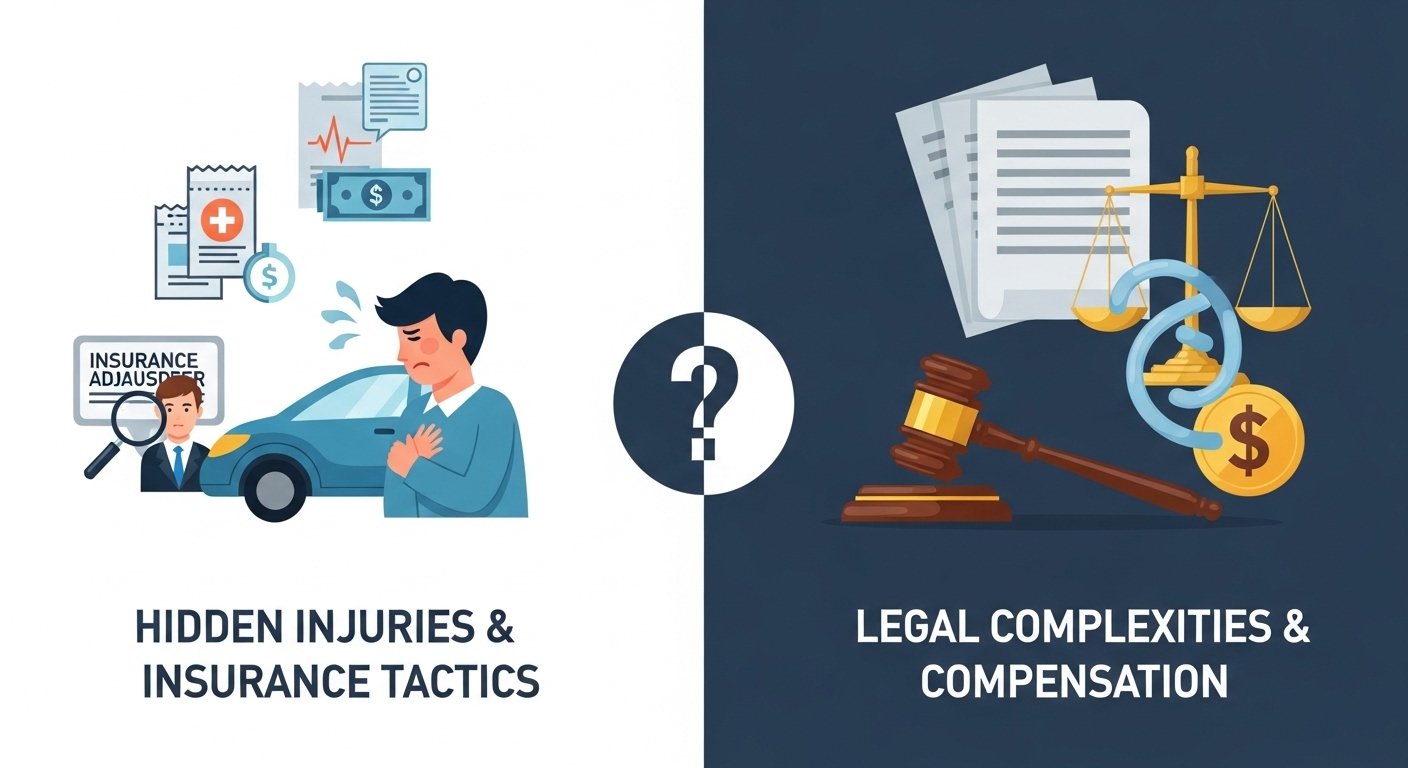
The instinct after a car accident that seems minor — no obvious serious injuries, relatively modest vehicle damage, everyone seemingly okay at the scene — is often to handle it simply. Exchange information, file an insurance claim, let the process run its course. It feels disproportionate to involve a lawyer when the accident was small and everything seems manageable. But this instinct, however reasonable it feels in the moment, leads many accident victims to make decisions that significantly undermine their ability to recover fair compensation for harms that only become apparent days or weeks after the event. Understanding when a lawyer is genuinely necessary — and what the cost of not having one can be — changes the calculation considerably.
Injuries Are Not Always Immediately Apparent
The most important thing to understand about car accident injuries is that the most significant ones are frequently not the most immediately obvious ones. Soft tissue injuries — strains, sprains, and tears in the muscles, tendons, and ligaments of the neck, back, and shoulders — often produce their most significant symptoms in the 24 to 72 hours following a collision, not at the scene. Whiplash, a common result of even low-speed rear-end collisions, can produce weeks or months of significant pain, restricted movement, and functional limitation from an accident that felt minor at the time. If you have already accepted a settlement or signed a release before these symptoms fully developed, you have likely forfeited your right to additional compensation.
Insurance Companies Have Professionals on Their Side
When you file a claim with an insurance company following an accident, you are engaging with a professional organization whose business model is directly affected by the amount it pays out on claims. Adjusters are trained and incentivized to resolve claims quickly and economically, and early settlement offers — which often arrive before the full extent of injuries and associated costs are known — are rarely the full measure of what a claim is worth. A San Bernardino personal injury lawyer who handles car accident claims regularly understands how insurance companies value cases, what evidence is needed to support a complete claim, and how to negotiate from a position of knowledge rather than urgency. Without that counterweight, individual claimants are structurally disadvantaged in a negotiation they have no experience conducting.
Medical Costs Can Exceed Initial Estimates
What appears to be a minor injury in the immediate aftermath of an accident can require more treatment than initially anticipated. A neck strain that seems manageable may require physical therapy over several months. A back injury initially dismissed as minor may involve imaging that reveals disc involvement requiring specialist care. Lost income during recovery, transportation to medical appointments, and the cost of household assistance during a period of limited mobility are all real economic consequences that extend beyond the initial medical visit. A complete legal claim accounts for the full trajectory of harm — past and future medical costs, lost income, and pain and suffering — rather than the costs visible at the moment of settlement.
Fault Is Not Always as Clear as It Seems
Even in accidents that appear straightforward, fault can be more complex than the initial narrative suggests. Contributing factors including road conditions, vehicle maintenance issues, the actions of third parties, and the precise sequence of events are not always captured in a police report or obvious from a scene inspection. In California’s comparative fault system, the allocation of fault between parties affects the compensation available to each, and insurance companies are motivated to argue for allocations that minimize their exposure. An attorney who investigates the accident thoroughly and understands how fault is assessed and argued in the relevant jurisdiction protects your interest in an accurate and fair determination.
Conclusion
Whether you need a lawyer after a minor car accident depends on the specifics of your situation — but the decision deserves more careful consideration than the impulse to handle it simply would suggest. If you have any symptoms, however mild, if the other party’s insurance company is contacting you for a statement or early settlement, or if there is any ambiguity about fault or the full extent of your damages, a consultation with a personal injury attorney costs nothing and could protect you from decisions that are difficult or impossible to reverse. The question is not whether your accident was minor — it is whether the consequences of handling it without professional guidance might turn out to be anything but.