









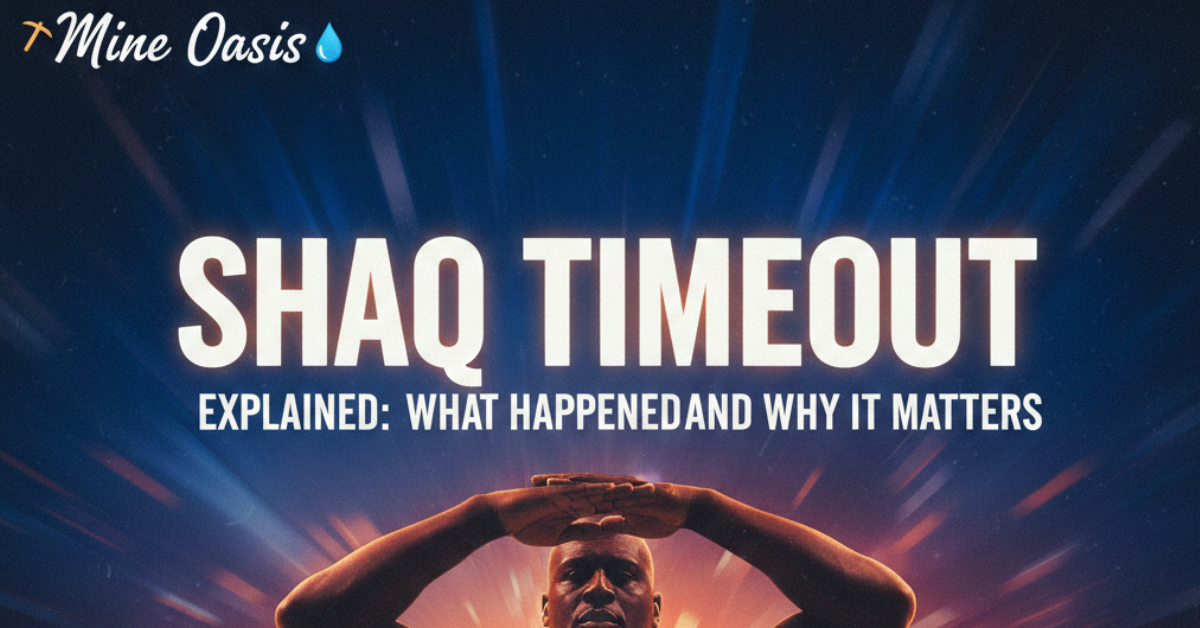
The game of basketball requires talent, strategy, and, at times, complete randomness. One move in particular, the Shaq Timeout, has caused quite a stir in the sport. Fans and athletes alike may be curious about, or even confused by, this word. Just what does that imply? What has caused it to become such an essential component of basketball conversations?
Delve into this intriguing idea with me as I show you how it sprang from the one-of-a-kind play of a legendary player and is shaping modern game tactics. Fasten your seatbelts because we’re about to go into the ins and outs of the it!
The Origins of the Shaq Timeout
In the early 2000s, when Shaquille O’Neal was at the height of his career, the Shaq Timeout was born. On the court, O’Neal was unstoppable, as he was famously dominant.
But his abilities weren’t the only thing that garnered attention. He became a major conversation topic due to his infamous free-throw shooting difficulties. The coaches understood the importance of devising a plan to address this issue while preserving game momentum.
Teams started calling timeouts on purpose whenever Shaq was fouled and about to go to the charity stripe once they noticed this tendency. The team was able to recover and capitalise on O’Neal’s poor shooting performance from that distance.
As a result, “Shaq Timeout” became known as a basketball strategic move that acknowledged his unique position. The phrase eventually grew to encompass not just those specific instances, but also more generalised coaching strategies employed in similar high-stakes contexts.
Why it Matters in Basketball Strategy
When it comes to basketball strategy, the Shaq Timeout is huge. It’s more than simply a break; it’s a strategic move that may change the course of a game.
Teams who take advantage of this respite are able to reevaluate their strategy and get back on track. During this break, coaches may assess the situation in real-time and make crucial modifications.
Furthermore, it’s a chance to throw off the rhythm of the other side. When called at the right moment, It may derail an opponent’s momentum or boost their confidence.
Additionally, it is crucial for any competitive sport to manage player exhaustion. In order to give important players a break without reducing their performance, the Shaq Timeout is implemented.
The key to success or failure in nail-biters typically lies in knowing when and how to use this strategy. Throughout a game, coaches should employ it strategically.
Famous Instances of the Shaq Timeout
Over the course of basketball’s history, the Shaq Timeout has witnessed several iconic events. Among the most well-known occurrences was Shaquille O’Neal’s dominance against the Indiana Pacers in the 2000 NBA Finals. Coaches sometimes had to call timeouts simply to refocus due to his size and athleticism.
The regular-season matchup with the Dallas Mavericks also included a memorable moment. Several stoppages occurred in this match because defenders were unable to restrain Shaq due to his overwhelming presence. Every timeout gave the other team a chance to regroup, but it also served to emphasise how unbeatable he might be.
Kobe Bryant and Shaq had that one memorable matchup when they both showed off their skills and had the other team huddle up after every explosive play by Shaq. Fans still speak about it. These events set the stage for conversations about making tactical alterations during live games, which reverberated long after he retired.
Criticisms and Controversies Surrounding the Shaq Timeout
Many have voiced their disapproval of the Shaq Timeout throughout the years. A number of people think it breaks the rhythm of the game. The flow of the game and the enthusiasm of the crowd can be severely dampened by frequent interruptions.
Its possible abuse by coaches is another concern raised by its detractors. The danger of being predictable arises when a team relies excessively on this technique. This information can be used by the opponent at critical points in the game.
Equal treatment is also a point of contention. Smaller teams have a harder time controlling their rotations since the regulation appears to benefit teams with powerful big men, like Shaquille O’Neal.
Many think that these tactics take away from the development of younger talent, since they focus more on performance optimisation and less on fostering growth, which might lead to insufficient playtime for these kids. All across the basketball world, this tension is still a hot topic today.
How Coaches are Adapting to the Shaq Timeout
As time goes on, coaches get smarter about how to use the Shaq Timeout. Now that many have realised how it affects the flow of the game, they are taking measures to combat it.
Rapid replacements are now being used by several teams. This has the dual benefit of keeping players from becoming tired and of throwing off the rhythm of teams whose strategy relies on taking advantage of timeouts. Developing a more dynamic tempo that reduces the likelihood of lengthy gaps is the objective.
Coaches often stress the need of talking during these breaks. They frequently utilise these situations to encourage their players to adapt and not let their momentum fade.
The way coaches are ready for possible its has also evolved with the use of statistics. The team’s strengths and areas for improvement are identified through an analysis of past games and individual performances under duress, which allows them to develop individualised strategies.
This flexibility is crucial to modern basketball strategy because it guarantees that every timeout is turned into an opportunity.
Conclusion
The Shaq Timeout goes beyond just a peculiar basketball incident. Coaches now approach strategy and player management in a whole new light. This respite will become more significant when teams keep evaluating their performance.
The strategic pause is being used in more and more innovative ways by coaches. They are aware that it may provide a chance for recuperation, which is very important, or even a place to regroup tactically when things go tough.
Variations on this notion could evolve if additional players follow Shaquille O’Neal’s lead. Both the game and the techniques used to play it are dynamic and ever-changing.
Since fans are always looking for new stuff and different plays, it’s probable that we’ll see other takes on the Shaq Timeout in future games. Its long-term effects may alter team dynamics as a whole as well as individual performances.
Just like when O’Neal initially brought his now-iconic timeout into national debate, basketball continues to adapt, allowing opportunity for creativity. As these ideas grow in importance as guiding principles for coaches at all levels of the game, exciting new innovations are on the horizon.
Read More: Troozer com Review: Features, Safety, and User Experience Online