









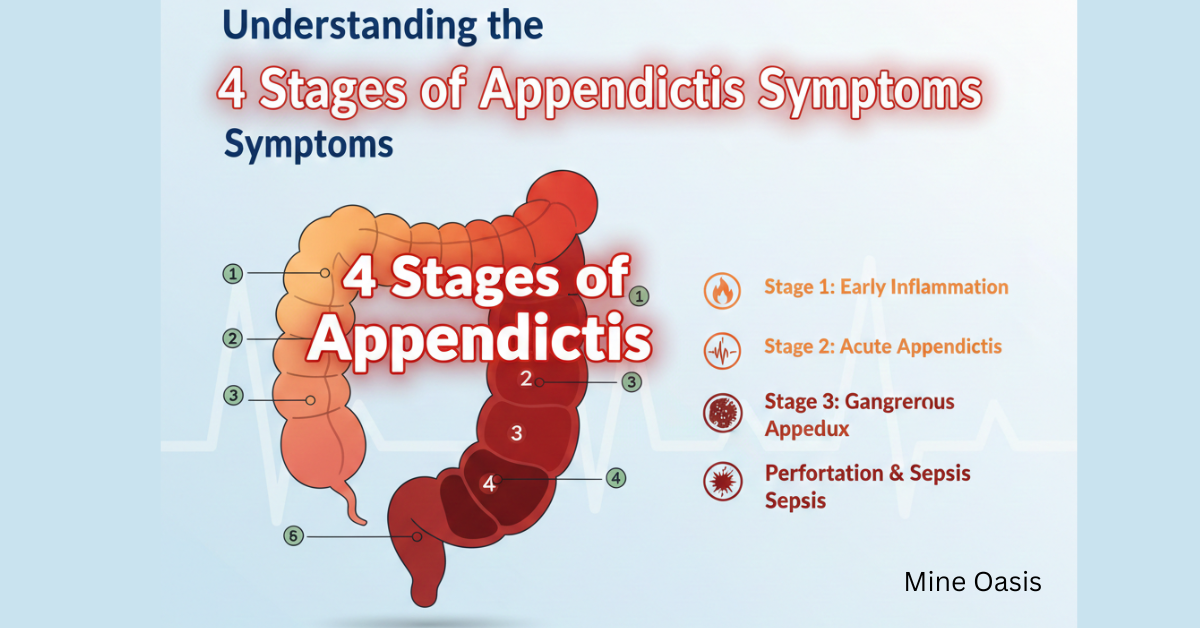
Introduction to 4 Stages of Appendicitis
An appendicitis flare-up can go from a little pain to a life-threatening medical emergency in the span of a few hours. In order to recognize and treat appendicitis early, it is essential to understand the 4 Stages of Appendicitis symptoms. Knowing the signs and symptoms of this frequent ailment might be helpful whether you’re dealing with nonspecific abdominal discomfort or just want to learn more about it.
If you want to know when to see a doctor and how to keep yourself educated about your health, this article will walk you through each step. How about we go on this 4 Stages of Appendicitis adventure?
Stage 1: Early Symptoms and Warning Signs
Initial appendicitis symptoms are usually mild. A nonspecific pain in the abdomen, usually around the navel, is the first symptom. It would be easy to dismiss this dull discomfort as insignificant.
A more intense ache may develop and move to your lower right abdomen as time goes on. Do not disregard this crucial indication as it may indicate appendicitis.
In the beginning, you could feel sick to your stomach and not want to eat. Bloating and a little temperature are other possible side effects. This is your body’s method of telling you that something is wrong.
Also, be mindful of any changes in bowel habits that occur suddenly. During this period, you may have either diarrhea or constipation.
In order to intervene promptly, it is critical to recognize these early indicators. Listening to your body when something doesn’t feel right is crucial since early identification greatly improves outcomes.
Stage 2: Progression of Symptoms and Diagnosis
Symptoms of appendicitis tend to get worse as the condition advances. A dull ache in the lower right quadrant of the abdomen may develop into a severe and ongoing ache. In many cases, this discomfort becomes an accurate sign of a more serious problem.
Nausea and vomiting may accompany the discomfort in the abdomen. Because of these symptoms, you may find it uncomfortable to eat or drink.
Imaging tests, such as CT scans or ultrasounds, are often ordered after a physical examination to confirm a diagnosis. Inflammation of the appendix and abdominal discomfort are two of the particular symptoms that doctors check for.
To further rule out infection, doctors may draw blood to see if the white blood cell count is too high. A delayed diagnosis at this point might cause serious consequences down the road, so getting medical help quickly is essential. The key to prompt medical attention is early detection of these warning symptoms.
Stage 3: Ruptured Appendix and Emergency Treatment
When appendicitis is left untreated, a burst appendix can develop, which is a very hazardous consequence. As a result, dangerous germs and other chemicals are released into the belly cavity. A condition called peritonitis can develop as a result of this.
In this phase, symptoms worsen quickly. Severe pain, which may spread from the original location in the lower right abdomen, is possible. Common symptoms include a high temperature, chills, nausea, and vomiting.
Prompt medical attention is essential in this situation. In most cases, doctors would advise patients to have surgery right away in order to clean up the abdominal region and remove the burst appendix. After surgery, patients are given antibiotics to fight against infection.
Recovery time and results can be greatly impacted by prompt action. It is critical to seek immediate medical attention if symptoms suddenly intensify at any stage of appendicitis, as delaying treatment raises the risks for serious complications.
Stage 4: Recovery and Post-Surgery Care
Everyone has a different recovery time following appendix surgery. Depending on the patient’s general health and the nature of the treatment, the majority of patients may usually return home after a day or two.
This is the stage when rest is most important. Taking it easy will aid in your recuperation as your body need time to mend. For a few weeks, stay away from anything that can injure you, such as hard lifting or vigorous activity.
In order to alleviate pain and care for wounds, follow your doctor’s orders. In order to avoid infections, it is crucial to keep the incision dry and clean.
Proper nutrition is also important for the healing process. At first, stick to bland, easy-to-digest foods; after you feel better, go return to your usual diet.
Remember to drink plenty of water and pay close attention to your body’s cues. Get in touch with your doctor right away if you notice any changes, such as greater pain or strange symptoms.
Complications of Untreated Appendicitis
Serious consequences from untreated appendicitis might put your health at danger. A burst appendix, which lets germs and poisons into the belly, is one of the worst possible results. The potentially fatal illness known as peritonitis can develop as a result of this.
The development of an abscess is another possible consequence. Pus may collect around an infected appendix even if it doesn’t burst. In addition to limiting treatment choices, this localized infection can produce excruciating pain and fever.
When appendicitis goes untreated, it can cause intestinal blockage. Additional pain and digestive problems might result when scar tissue or enlarged tissues caused by inflammation obstruct normal intestinal passage.
Anyone suffering symptoms associated to appendicitis must seek prompt diagnosis and treatment due to the importance of recognizing these dangers. Serious problems may arise in the future if warning signals are disregarded.
Conclusion
The key to a successful treatment of appendicitis is early detection. If you want to know how appendicitis develops and what symptoms to look out for, the 4 Stages of Appendicitis are a good place to start.
Becoming aware of the subtle indications that begin Stage 1 is vital, as they often go unrecognized. Seeking medical help becomes absolutely necessary when symptoms advance in Stage 2 prior to reaching a critical stage. If the appendix ruptures during Stage 3, immediate medical attention is needed to avoid serious consequences.
Stage 4 surgery requires careful attention and rehabilitation in order to promote healing. Timely intervention might have prevented the substantial health consequences associated with untreated appendicitis.
Individuals are better able to seek help when they need it when they understand the significance of these stages. The likelihood of problems and the efficacy of therapy are both greatly diminished with early identification. Being careful with your health might prevent serious complications like appendicitis, which can be life-threatening, or at least shorten the healing period and alleviate a lot of pain.
Read More: Cadibara – Latest News, Features, and What It Offers Users