








Oral implant surgery can restore your bite and your confidence. Yet your work is not done when you leave the office. Your daily choices now protect that implant or put it at risk. Infection, gum loss, and bone loss often start small. Then they grow fast. You can prevent that. Your care plan does not need to feel complex. It needs to be clear, steady, and firm. This guide gives you six direct steps you can follow at home. You will learn how to clean around the implant, control swelling, manage pain, and protect the surgical site during meals. You will also see when to call your New Braunfels, TX oral surgeon before a small problem becomes a serious one. With these simple habits, you keep your mouth strong, your implant secure, and your daily life steady.
1. Keep the mouth clean from day one
Cleanliness keeps infection away. You need to protect the blood clot and the stitches while you keep germs low.
Use this simple plan.
- For the first 24 hours, do not brush the implant site. Let the clot form.
- Brush the other teeth two times each day. Use a soft brush and gentle pressure.
- After 24 hours, rinse with warm salt water three to four times each day. Use one cup of warm water with one-half teaspoon of salt. Do not swish hard. Let the water roll in your mouth, then tip and let it fall out.
- Wait on any store mouthwash that has alcohol until your surgeon says it is safe.
The Centers for Disease Control and Prevention notes that clean teeth and gums lower the risk of gum disease. That same rule protects your implant.
2. Protect the implant during meals
Food choice in the first weeks can keep the site calm or cause fresh pain. You want food that needs little chewing and does not press on the stitches.
Use this quick guide.
| Time after surgery | Safer foods | Foods to avoid |
|---|---|---|
| First 24 to 48 hours | Cool soups, yogurt, applesauce, mashed potatoes | Hot food, spicy food, crunchy chips, nuts |
| Days 3 to 7 | Eggs, pasta, soft rice, soft-cooked vegetables | Steak, crusty bread, raw carrots, popcorn |
| Weeks 2 to 4 | Most soft meats, soft sandwiches, cooked fruits | Hard candy, ice chewing, sticky candy |
Always chew on the side away from the implant when you can. Cut food into small bites. Take your time. The less force on the site, the smoother the healing.
3. Use pain and swelling as warning signs
Some pain and swelling are common after surgery. Yet severe pain that grows or swelling that returns later often means trouble.
Follow the plan from your surgeon for pain control. Many people use medicines like ibuprofen or acetaminophen. Take it as directed. Never take more than the label or your surgeon allows.
To limit swelling you can:
- Place a cold pack on your cheek for 15 minutes. Then remove it for 15 minutes. Repeat during the first day.
- Sleep with your head raised on two pillows for the first few nights.
Call your surgeon at once if you notice:
- Swelling that gets worse after day three.
- Strong throbbing pain that medicine does not touch.
- Fever, foul taste, or pus near the site.
These signs can show an infection or a healing problem. Fast care can save the implant and protect your health.
4. Guard the clot and stitches from pressure
The blood clot and stitches hold the site together. Pressure can tear them. That can lead to bleeding, pain, and infection.
For the first days you should:
- Do not touch the site with your tongue or fingers.
- Avoid spitting. Let saliva drip into the sink.
- Avoid using straws. The suction can pull the clot out.
- Skip smoking and vaping. They slow healing and raise the risk of implant failure.
The National Institute of Dental and Craniofacial Research notes that tobacco use raises the chance that implants fail. Quitting before and after surgery gives your mouth a better chance to heal.
5. Keep daily brushing and flossing steady
Once your surgeon clears you, you can brush near the implant. Care near the implant needs a gentle hand.
You can:
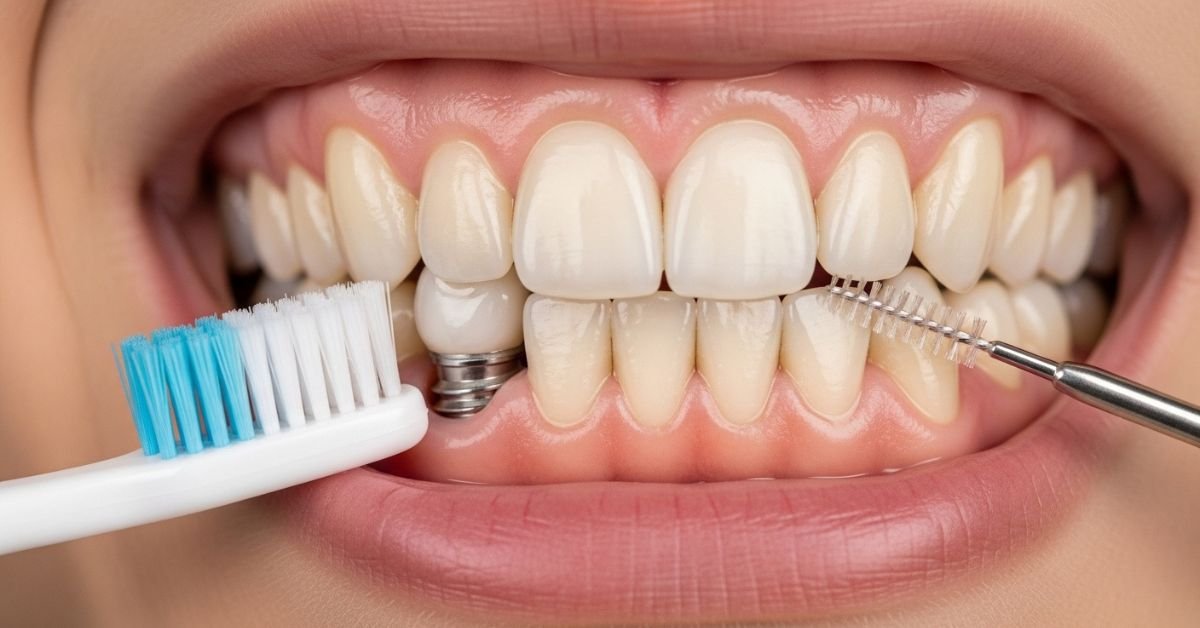
- Use a soft toothbrush or an extra soft brush for the implant side.
- Angle the bristles toward the gum line. Use small circles.
- Clean two times each day for two minutes.
- Use floss or special implant floss once each day, sliding it under the gum collar if your surgeon taught you that method.
Some people use small brushes made for the spaces between teeth. If your surgeon approves these, choose one with a plastic-coated wire so it does not scratch the implant post.
Steady home care keeps plaque away from the implant. That lowers the risk of gum infection and bone loss around the post.
6. Keep regular checkups and speak up early
Home care does a lot. Yet it cannot replace checkups. Your surgeon and dentist can see small changes that you cannot feel.
Plan to:
- Keep all follow-up visits after surgery, even if you feel fine.
- Return for cleanings and exams every six months or as your dentist advises.
- Tell your care team about any change in bite, loosening, or bleeding.
Call your surgeon at once if you notice:
- Movement in the implant or crown.
- Bleeding when you brush near the site.
- Red, puffy, or shiny gums near the implant.
Early care can often fix small gum infections and protect the bone. Waiting can risk the whole implant.
Simple habits that protect your implant for life
Strong implants depend on simple daily habits. Clean your mouth. Choose soft food while you heal. Watch for pain and swelling. Guard the clot and stitches. Brush and floss with care. Keep regular visits.
Each choice you make either supports healing or strains it. With clear steps and quick calls when something feels wrong, you give your implant the best chance to last for many years.