









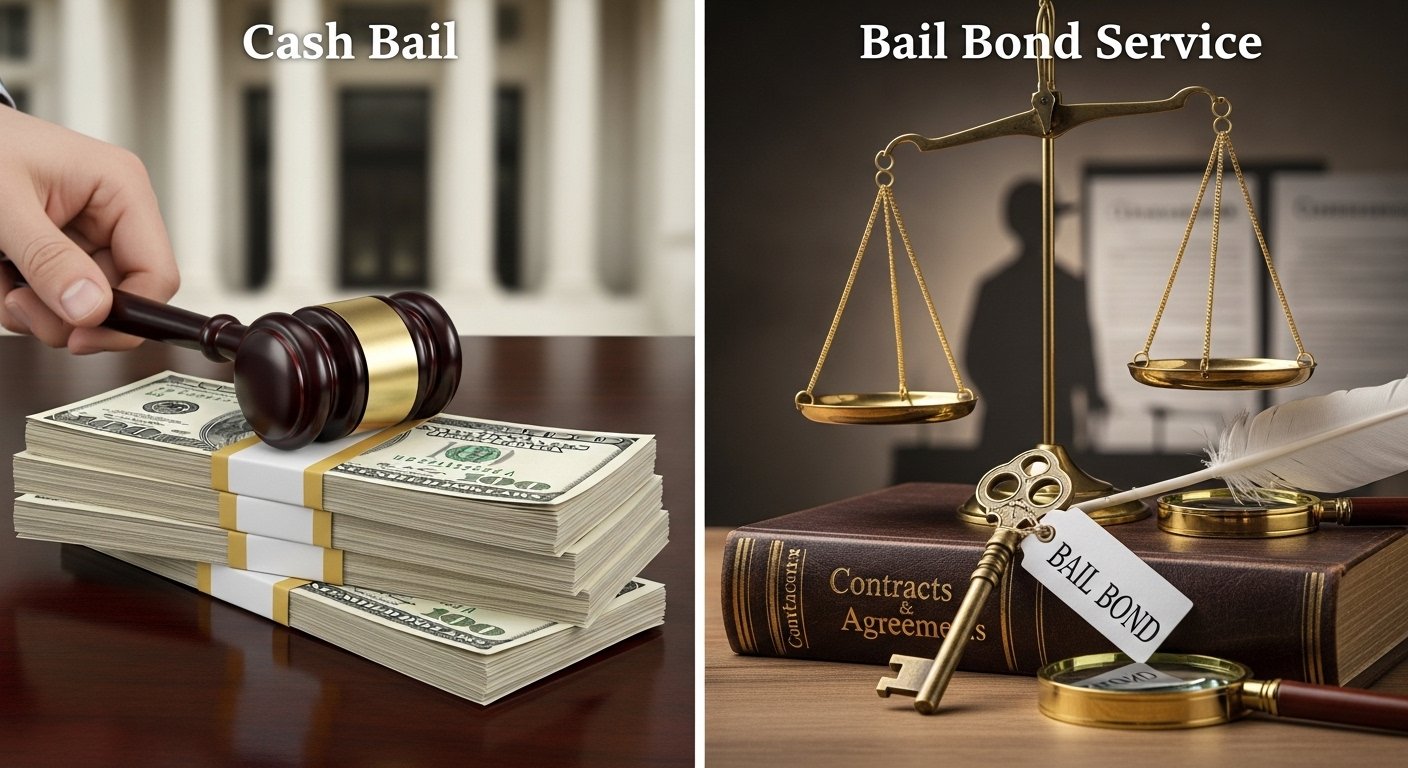
After an arrest, families often want to know how to secure release quickly. Once a judge sets bail, there are two main options: paying cash bail directly to the court or using a bail bond service. Each option has its pros and cons, depending on your financial situation and circumstances. Understanding the differences between cash bail and bail bond services can help you make an informed decision.
What Is Cash Bail?
Cash bail requires paying the full bail amount directly to the court as a guarantee the defendant will return for all scheduled court dates. If the defendant complies with all court conditions and attends every hearing, the court refunds the bail amount at the end of the case, minus any administrative fees.
Cash bail can be a good option when:
- The bail amount is affordable
- The family has immediate access to funds
- There is low risk of missing court dates
However, bail amounts can be high, and many families can’t afford thousands of dollars on short notice. Tying up a large sum of money for an extended period can also cause financial strain.
What Is a Bail Bond Service?
A bail bond service acts as a financial guarantee to the court on behalf of a defendant. Instead of paying the full bail amount, the family pays a non-refundable percentage fee to the bondsman, who then posts the full bond. In some cases, collateral such as property or valuables may be required, depending on the bail amount. Using a bail bond service in Summit County allows families to secure a defendant’s release without covering the entire bail upfront, making the process more affordable. This option helps reduce immediate financial strain for many families.
Comparing Upfront Costs
One of the biggest differences between cash bail and a bail bond service is the initial cost.
Cash Bail
- Requires paying the full bail amount
- Money is refunded if court requirements are met
- Can strain savings or require borrowing large sums
Bail Bond Service
- Requires paying a smaller percentage fee
- Fee is non-refundable
- May require collateral
If the bail is low, cash bail might be a good option. However, if the amount is high, a bondsman may be more practical. Ultimately, your financial flexibility will determine the best choice.
Considering Financial Risk
With cash bail, the court holds your money until the case is resolved. While you may eventually get a refund, the funds remain inaccessible throughout the legal process. If the defendant misses a court date, the court can keep the entire bail amount. Using a bail bond service shifts responsibility to the bondsman, who pays the full bail. However, if the defendant fails to appear, the bondsman can seek repayment from the signer or claim any collateral. Understanding these risks helps families make informed decisions and avoid costly mistakes.
Speed of Release
Both options can lead to release, but the speed of the process depends on accurate paperwork and knowledge of local procedures. Experienced professionals are often familiar with jail protocols and documentation requirements. Partnering with a bail bonds service can help streamline paperwork and minimize delays. Efficiency is crucial when someone is in custody, and proper coordination can significantly speed up the process.
Long-Term Financial Impact
When choosing between cash bail and a bail bond service, it’s important to consider more than just immediate release. Cash bail allows you to recover most of your money later if all court conditions are met. However, locking up a large sum can make it harder to cover legal fees, household bills, or other expenses. A bail bond service requires a smaller upfront payment, but that fee is non-refundable. For many families, maintaining cash flow is more critical than eventual reimbursement. Balancing immediate needs with long-term financial stability is key.
Court Appearance Responsibility
No matter which option you choose, attending all court dates is essential. Missing a hearing can result in additional charges and financial penalties. Both cash bail and bail bonds require compliance with court conditions. Staying organized and informed safeguards both your investment and legal standing. Clear communication and responsibility are crucial to avoiding issues.
Which Option Is Better?
There is no one-size-fits-all answer. The better choice depends on your financial situation, the bail amount, and your comfort level with risk.
Cash bail may be better if:
- You can afford the full amount without hardship
- You prefer to avoid non-refundable fees
- You are confident in meeting all court requirements
A bail bond service may be better if:
- Bail is too high to pay in full
- You need immediate financial flexibility
- You want professional guidance through the process
Carefully evaluating your circumstances helps you choose the most practical solution.
Conclusion
Navigating bail decisions after an arrest can be overwhelming. Understanding the difference between cash bail and bail bond services can help families make informed choices. Both options enable release but come with distinct financial and legal obligations. Evaluating your budget, risk tolerance, and long-term needs can guide you to the best option. A thoughtful choice reduces financial stress and allows you to focus on preparing for court proceedings.