








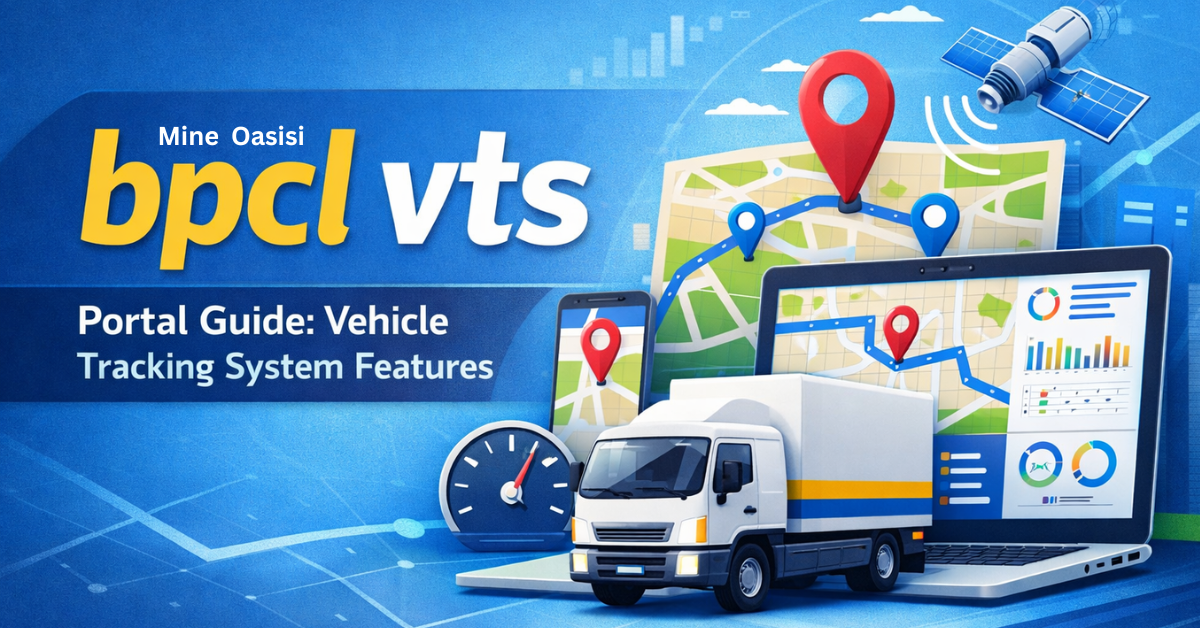
Introduction to BPCL VTS Portal
Attempting to make your way through a fleet’s logistics may frequently feel like you’re in a labyrinth. Companies that depend on vehicle transport must have the ability to see how their fleet is doing in real-time. Introducing the BPCL VTS Portal, a game-changing solution for enterprise vehicle management. This portal helps to simplify processes while guaranteeing efficiency and safety with its enhanced features and user-friendly navigation.
Gaining a grasp of the features offered by the BPCL VTS will help you make better decisions, whether it’s about fuel consumption management or driver behaviour monitoring. Examining this Vehicle Tracking System in further detail will reveal why it is an invaluable tool for BPCL trucks.
What is a Vehicle Tracking System?
One piece of technology that can track where cars are at all times is called a Vehicle Tracking System (VTS). To give precise information about where a vehicle is, it makes use of cellular networks and GPS satellites.
Vehicle owners or fleet managers may always know precisely where their cars are thanks to this solution. When it comes to logistics, safety, and efficiency, this data can be vital.
Not only can VTS monitor where you are, but it can also glean useful information about your speed and driving habits. Insight into driving behaviour and route optimisation are aided by these indicators.
Businesses may improve operating efficiency and save money on fuel and unauthorised use with these features. The advantages of a well-integrated VTS extend far beyond simple tracking; they enable organisations to make data-driven choices in real-time.
Benefits of Using a VTS Portal for BPCL Vehicles
In order to improve operating efficiency, BPCL vehicles can benefit greatly from using a Vehicle Tracking System (VTS) portal.
It enables better fleet management first and foremost. Managers can keep tabs on where their vehicles are at all times with the use of real-time tracking, which speeds up deliveries and cuts down on wasted time.
Saving money is another major perk. In order to cut costs associated with fuel wastage and maintenance, BPCL may optimise routes and track fuel use.
Driver behaviour analysis improves safety. Insights on driving patterns made possible by the VTS portal allow for more effective training programs that encourage safe driving behaviours.
The approach also encourages openness in business dealings. Logistics procedures are made more trustworthy when stakeholders have easy access to data on vehicle movements and performance measures.
It provides useful analytics, which aid in proactive decision-making. This enables companies to make well-informed decisions on the distribution of resources and future planning.
Features of the BPCL VTS Portal
Many tools that improve fleet management are pre-installed on the BPCL VTS Portal. The ability to get precise position updates in real time via vehicle tracking is a notable feature. This makes it possible for logistics workers to keep tabs on their cars at all times.
Optimisation of routes is another important component. Time and petrol money are saved thanks to the system’s analysis of traffic patterns and recommendations of the best routes.
Another level of efficiency is added via fuel monitoring. Users are able to monitor fuel use throughout the whole fleet, which leads to more accurate budgeting and reduced wastage.
Analysing driver behaviour can boost efficiency and security. Drivers’ speed and braking patterns may be evaluated so that BPCL can provide them with individualised training to make its operations safer.
A. Real-time vehicle tracking
BPCL’s game is completely changed by real-time vehicle monitoring. Any time, wherever, fleet managers can now see exactly where their cars are thanks to this function. Every delivery is guaranteed to remain on schedule with this capacity.
With the use of GPS, the system can determine exactly where every car is. It enables swift modifications in the event of route changes or delays. Operators of fleets can enhance operating efficiency and react more quickly to unforeseen circumstances.
Improved safety is another benefit of real-time tracking. Notifications are promptly sent out in the event that a vehicle deviates from its intended route or is compromised by unauthorised individuals. This preventative measure lessens the chances of theft and abuse.
It also encourages drivers to take responsibility for their actions. When drivers are aware they are being watched, they are more likely to drive responsibly, which boosts fleet productivity. The advantages aren’t limited to just a better location; they encompass the optimisation of your whole logistics operation.
B. Route optimization
The BPCL VTS portal’s route optimisation feature revolutionises fleet management. It aids in finding the most efficient routes for cars by analysing different data sources.
Factors such as weather trends, road kinds, and traffic conditions are considered by this feature. Drivers are able to steer clear of dangerous places and heavy traffic because of this.
What was the result? Enhanced fuel efficiency and punctual delivery. By using the most efficient routes, vehicles may save money and make sure customers are satisfied with the service they get.
Better scheduling of maintenance tasks is another benefit of route optimisation. It improves the accuracy with which management can forecast vehicle wear from usage trends.
Better decisions that increase operational efficiency everywhere are the end result of using this potent instrument.
C. Fuel monitoring
An essential part of the BPCL VTS interface is fuel monitoring. Fleet managers may monitor fuel use in real-time using this feature.
Businesses can see trends and outliers with accurate data. This helps identify any problems, such as fuel theft or wasting.
The system generates comprehensive data that display the fuel utilisation of different cars. These insights are great for optimising operations and cutting expenses.
It is also possible to set up notifications for when fuel levels suddenly drop or rise. In the event that any inconsistencies emerge, prompt alerts enable prompt resolution.
Businesses may boost efficiency and aid sustainability efforts by reducing emissions caused by overconsumption by using these elements. Also, drivers are more likely to take responsibility of their actions because to the openness that comes with good fuel monitoring.
D. Driver behavior analysis
An essential component of the BPCL VTS site is driver behaviour analysis. It reveals how drivers handle their cars, which may greatly improve efficiency and safety.
Speeding, hard braking, and quick acceleration are just some of the driving patterns that the system tracks using data gathered from many sensors. In order to spot trends that could require fixing, this data is priceless.
Fleet managers may make more informed decisions about driver training based on data collected via behaviour analysis. Improving one’s driving abilities has several benefits, including a decrease in accidents, maintenance expenses, and fuel usage.
Recognising good conduct also encourages drivers to take responsibility for their actions. They will be more motivated to follow corporate standards when driving if incentives are offered for safe behaviours.
If BPCL wants to maximise fleet performance and guarantee operational excellence in its transportation network, it must first understand driver behaviour.
How to Access and Use the BPCL VTS Portal
Simple navigation is provided by the BPCL VTS Portal. Finding the login section on the official website should be your first step. Registration is necessary for new users. To make an account, please fill all the required fields.
You will see a user-friendly dashboard when you log in. All features are conveniently located here. Use the streamlined navigation to quickly access features like fuel monitoring and live tracking.
Any registered car may be located by entering its identifying number or by choosing it from a list. Status and location updates will be shown in real-time on the site.
Your experience is improved when you use other tools on the site. You can remain updated on your fleet’s performance at all times by customising notifications for incidents like speeding or route deviations.
Case Study: Successful Implementation of VTS Portal by BPCL
The Vehicle Tracking System (VTS) Portal has been put into action by BPCL, demonstrating its usefulness and capabilities in practical situations. Problems in managing vehicles, fuel use, and tracking driver behaviour were obstacles the business had to overcome. They revolutionised their operations by using the BPCL VTS Portal.
Notable cases include a group of delivery vehicles that were previously beset by inefficient routes and exorbitant fuel expenses. Thanks to the VTS system integration, BPCL now has real-time vehicle tracking. Because of this transparency, routes might be changed on the fly in response to changes in traffic or delays.
Impressive outcomes were achieved. As drivers adhered to optimised routes that cut down on idle time and needless detours, fuel usage dropped by nearly 15%. Lessening the likelihood of accidents and resulting reductions in insurance rates, data acquired on driver behaviour also provide light on safe driving practices.
In addition, staff involvement rose as a result of drivers’ increased sense of personal responsibility for their work and the helpful criticism they received in the form of driver analysis reports. By reducing carbon footprints, the effective implementation improved operational efficiency and contributed to sustainability goals.
This case study shows how the BPCL VTS can improve fleet management in many ways, which is why it’s a must-have tool for innovative companies who want to maximise the efficiency of their logistical operations.
Read More: BSI Business Park H15: Offices, Location & Investment Guide