








Shipping artwork can be nerve-wracking. Getting your piece to its destination safely requires more than just bubble wrap and hope. With the right materials and a methodical approach, you can protect almost any artwork during transit. This guide walks you through everything, from gathering supplies to choosing a courier, ensuring your art arrives exactly as it left.
Essential supplies for safe art transport
Before you start wrapping, gather everything you need. Improvising mid-pack is how corners get cut, canvases get damaged.
Here’s what you’ll need:
- Glassine paper: This acid-free, moisture-resistant paper is the first layer of protection for most artwork. Archival glassine paper is the gold standard for protecting delicate surfaces, such as paintings, drawings, and prints, from abrasion and humidity.
- Bubble wrap: Use low-density, non-plasticized bubble wrap. Make sure the bubbles face away from the artwork surface to prevent texture transfer.
- Foam sheets or polyethylene foam: Great for cushioning rigid works and filling gaps inside boxes.
- Corner protectors: Cardboard or foam corner protectors shield the most vulnerable parts of framed pieces.
- Packing tape and painter’s tape: Painter’s tape is safe for use on frames; packing tape seals the outer packaging.
- Heavy-duty double-wall cardboard boxes: Standard single-wall boxes aren’t enough for most artwork. Double-wall construction adds meaningful rigidity.
- Mirror/picture boxes: These adjustable telescoping boxes are ideal for framed work and can be sized to fit snugly.
- Silica gel packets: Help regulate moisture inside the package during long-distance or international shipments.
Having everything on hand before you start makes the packing process faster and far less stressful.
How to wrap and pad different types of artwork
Different media call for different approaches. Here’s how to handle the most common types.
Framed paintings and artwork under glass
Start by taping an “X” across the glass with painter’s tape. If the glass breaks in transit, this holds the shards in place and protects the artwork behind it.
Next, wrap the piece in glassine, securing it with tape that doesn’t touch the frame’s finish. Follow with a layer of bubble wrap (bubbles out), then secure corner protectors over each corner. Place the wrapped piece in a snug-fitting mirror box, filling any space with crumpled kraft paper or foam sheets.
Unframed canvas paintings
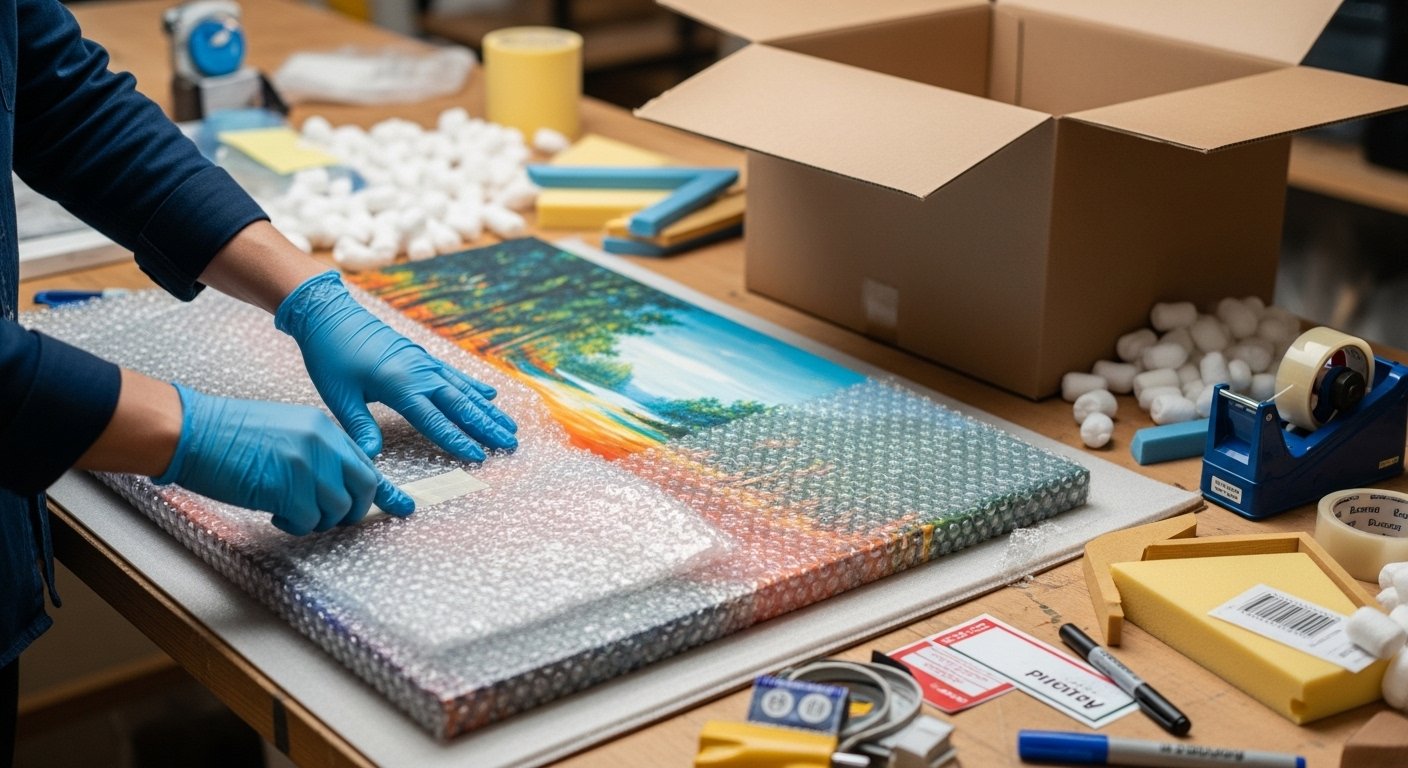
Lay the canvas face-down on a clean surface. Place a sheet of glassine over the painted surface before flipping it face-up to wrap—this protects against accidental smudging. Wrap loosely in bubble wrap, making sure nothing presses directly on the paint.
For extra protection, slide the wrapped canvas between two pieces of foam board cut slightly larger than the canvas itself. This creates a rigid sandwich that prevents bending.
Works on paper (prints, drawings, watercolors)
Lay the work flat on archival glassine paper and fold the paper over to encase it. Sandwich the wrapped piece between two sheets of rigid foam board or corrugated cardboard, then seal the edges with tape. Never roll works on paper unless it was originally stored that way—rolling can crack media and damage sizing in the paper.
Sculptures and three-dimensional works
Wrap each protruding element individually with foam sheeting, then wrap the whole piece. Suspend it in the center of a box using foam offcuts or crumpled paper so it doesn’t touch any wall of the box. The goal is at least two inches of cushioning on all sides.
Building or selecting a crate for high-value pieces
For valuable or oversized artwork, a standard cardboard box simply won’t cut it. A custom wooden crate provides a level of protection that’s worth every penny.
When to use a crate
Consider crating for:
- Paintings or sculptures valued over $5,000
- Pieces larger than 40 inches in any dimension
- Works traveling internationally or via freight
- Extremely fragile or irreplaceable items
Custom crates vs. off-the-shelf options
Custom crates are built to fit the exact dimensions of your piece and often include internal cleats or a “picture frame” interior that holds the work suspended away from the crate walls. Art shipping specialists and some fine art handlers can build these for you, typically from plywood or softwood lumber.
If a fully custom crate is outside your budget, look for adjustable wooden crates from art supply companies. These aren’t as tailored, but they offer far better protection than cardboard for high-value work.
What a well-built crate should include
- A foam or padded interior lining
- Secure closures (screws, not nails, so the crate can be opened without damage)
- “Fragile” and “This Side Up” labels on the exterior
- A moisture barrier if the piece will be in transit for more than a few days
For extremely sensitive works—antique pieces, works on panel, or anything with flaking media—consult a professional art handler or conservator before packing.
Choosing the right courier and insurance
Even a perfectly packed piece can encounter rough handling, delays, or loss. Choosing the right courier and securing appropriate insurance are non-negotiable steps. When comparing couriers, ask specifically about their handling procedures for fragile items and whether they offer guaranteed delivery windows.
Insuring your shipment
Standard carrier liability is rarely enough. Some carriers limit declared value coverage to $50,000, and even that requires documentation and often covers only a fraction of the actual loss.
For meaningful coverage, consider:
- Declared value coverage through the carrier: A basic starting point, but read the fine print.
- Fine art insurance riders: If you already have a homeowner’s or renter’s policy, check whether it covers art in transit. Many don’t without a specific rider.
Document everything before shipping: photograph the work from multiple angles, keep any appraisals or certificates of authenticity, and retain all packing receipts. This documentation is essential if you ever need to file a claim.
Conclusion
Preparing artwork for shipping takes time, but the alternative—receiving a damaged piece with no recourse—is far worse. Start with quality materials, match your wrapping technique to the medium, and invest in a crate or specialty courier when the stakes are high. The right courier and adequate insurance round out the process, giving you real peace of mind from handoff to delivery. Follow these steps, and your artwork has every chance of arriving in perfect condition.